FASTBOOK & AUTOLOAD

FASTBOOK & AUTOLOAD book block feeder

Automatic feeder


This automatic book block feeder offers a variety of applications such as hard cover book lines, perfect binders or back gluing machines, and more.

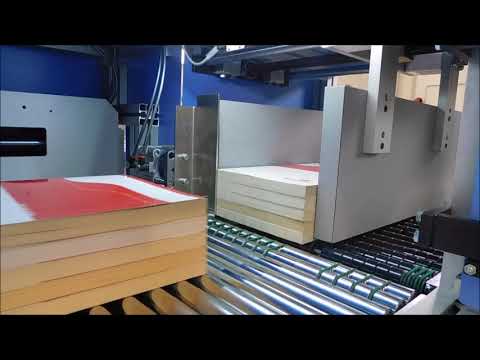
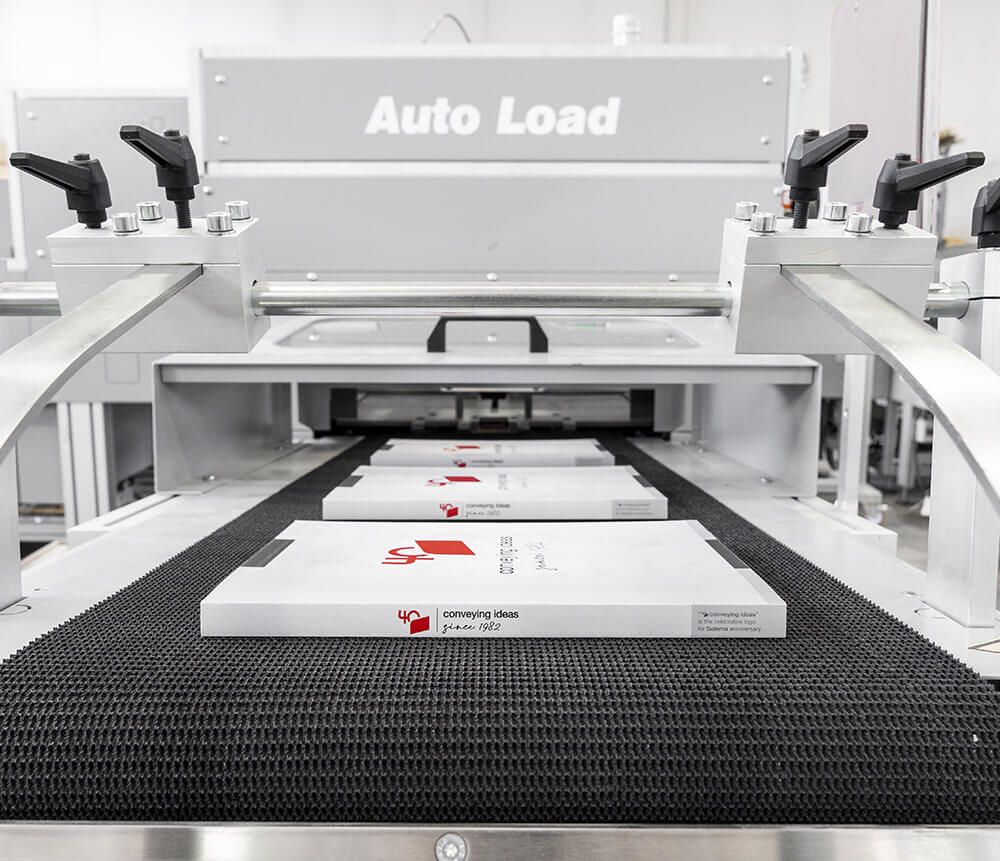
The FAST BOOK is electronically linked to the following machine by an encoder and photocell; its speed is therefore controlled by that machine. The encoder reads the speed and the photocell checks when the finger of the transport chain (where applicable) is passing through. The operator places the book block into the hopper of the boo block feeder. A moving table transfers one single product between two driven rollers (an upper and a lower one). The upper roller is adjustable in height and it is pressed onto the product by a pneumatic cylinder during the transfer process.

The AUTOLOAD is a pre-pile conveyor, consisting of a three meter (ten feet) friction-free conveyor, which automatically feeds the book block feeder. The conveyor is available with infeed direction into the book block feeder from the right or the left side. Also the length of the conveyor can be designed to be adapted to the different room/space conditions.


Request Information

Technical Data

Machine speedmax. 8000 products/hour
Product dimensions without Autoload (L x W x H)

min. 120 × 100 × 2 mm

(4 34 × 4 × 18)

min. 100 × 70 × 2 mm with opt. kit

(4 × 2 3× 18

max. 520 × 440 × 80 mm

(20 12 × 17 3× 3 18)

Pile height without Autoloadmax. 350 mm (13 34”)

Product dimensions with Autoload

(L x W x H)

min. 120 × 100 × 2 mm

(4 34 × 4 × 18)

min. 100 × 70 × 2 mm with opt. kit 

(4 × 2 3× 18

max. 520 × 330 × 80 mm

(20 12 × 13 ×3 18”)

Pile height with Autoloadmax. 200 mm (7 78”)


Video Gallery

FAQ

An automatic book block feeder streamlines the loading process in bookbinding lines. The operator places stacks of book blocks onto the feeder and sets the required production parameters. The machine then automatically separates each book block, aligns it, checks its position and feeds it into the binding or finishing line at a constant speed. This reduces manual handling, prevents bottlenecks and ensures a continuous, reliable workflow with greater productivity and consistency.
An automatic book block feeder provides greater control at the beginning of the production process, where inconsistencies often occur. Automating feeding makes the workflow more structured and predictable, reducing reliance on manual handling. This leads to more stable product management, especially when production volumes increase or operations run over extended shifts. Proper feeding also has a direct impact on the quality of downstream processes.
In bindery lines, maintaining a steady flow is essential. Automated systems help ensure a consistent product distribution, preventing sudden accumulation or slowdowns. The book block feeder supports a more balanced production pace and simplifies the management of format changes. Greater consistency also reduces the need for corrective interventions and allows the line to run longer without interruptions.
Integration depends on how well the system adapts to the dynamics of the production line. An automatic book block feeder uses control systems to follow variations from downstream machines, automatically adjusting speed and timing. This approach helps avoid misalignment between stages and keeps the overall process coordinated. The result is a smoother workflow, where each component operates in sync without creating bottlenecks.
Available solutions vary depending on the level of automation and production requirements. A book feeder can be configured with different elements, such as transfer tables, rollers, or pre-pile systems, to match specific needs. In practical applications, solutions like FASTBOOK & AUTOLOAD show how feeding and pre-pile management can be combined to simplify product infeed. This type of configuration helps maintain a more continuous and manageable workflow.