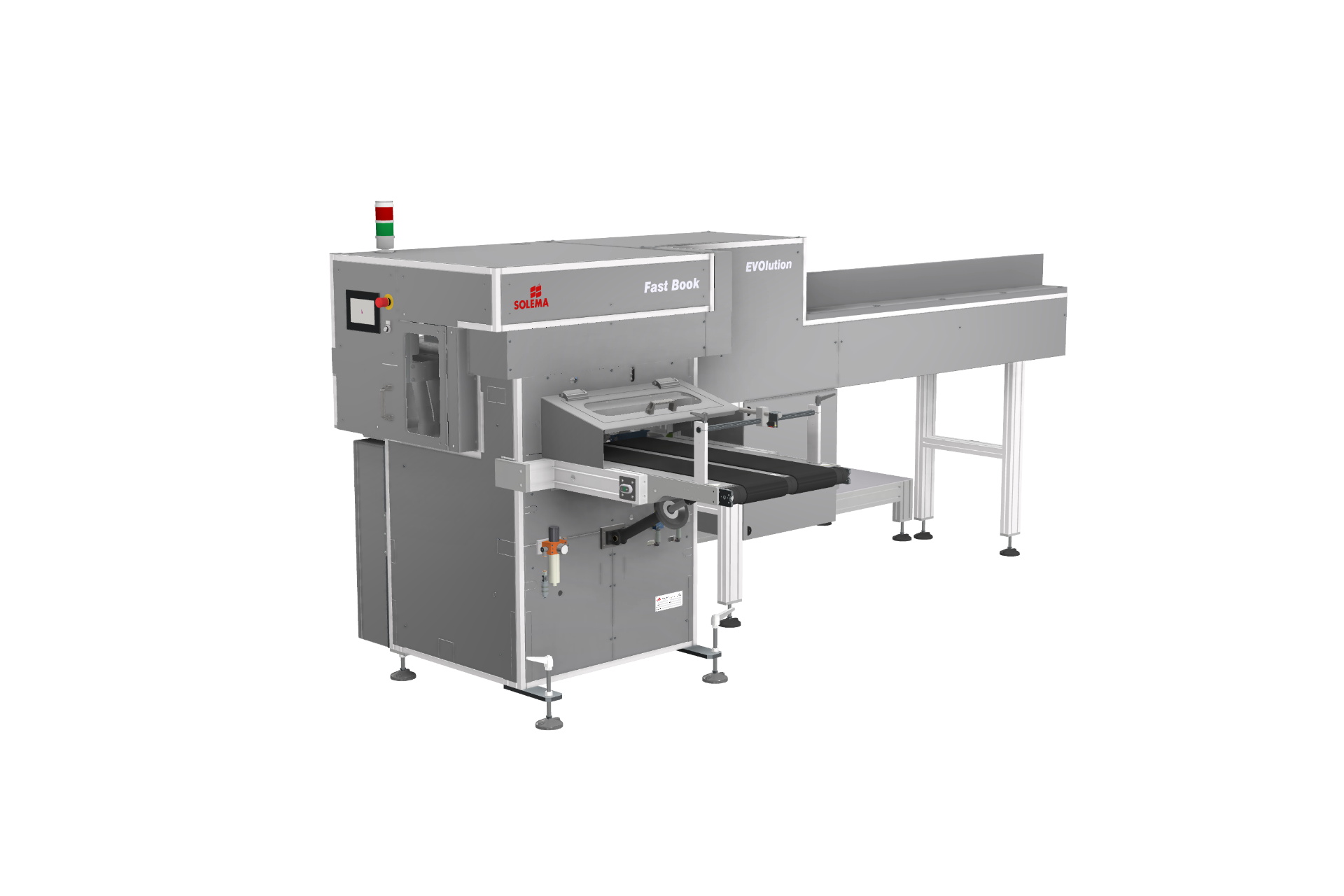
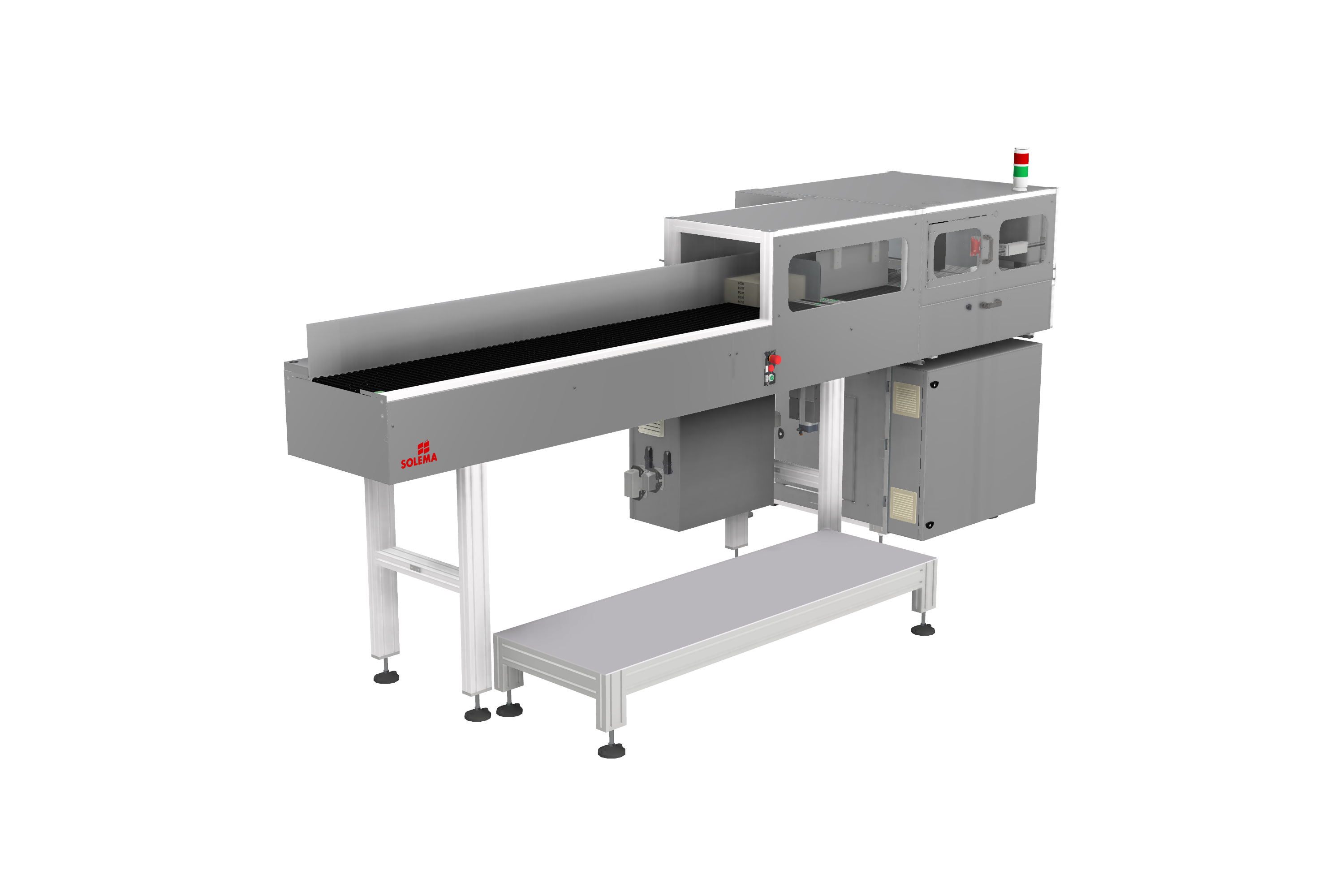
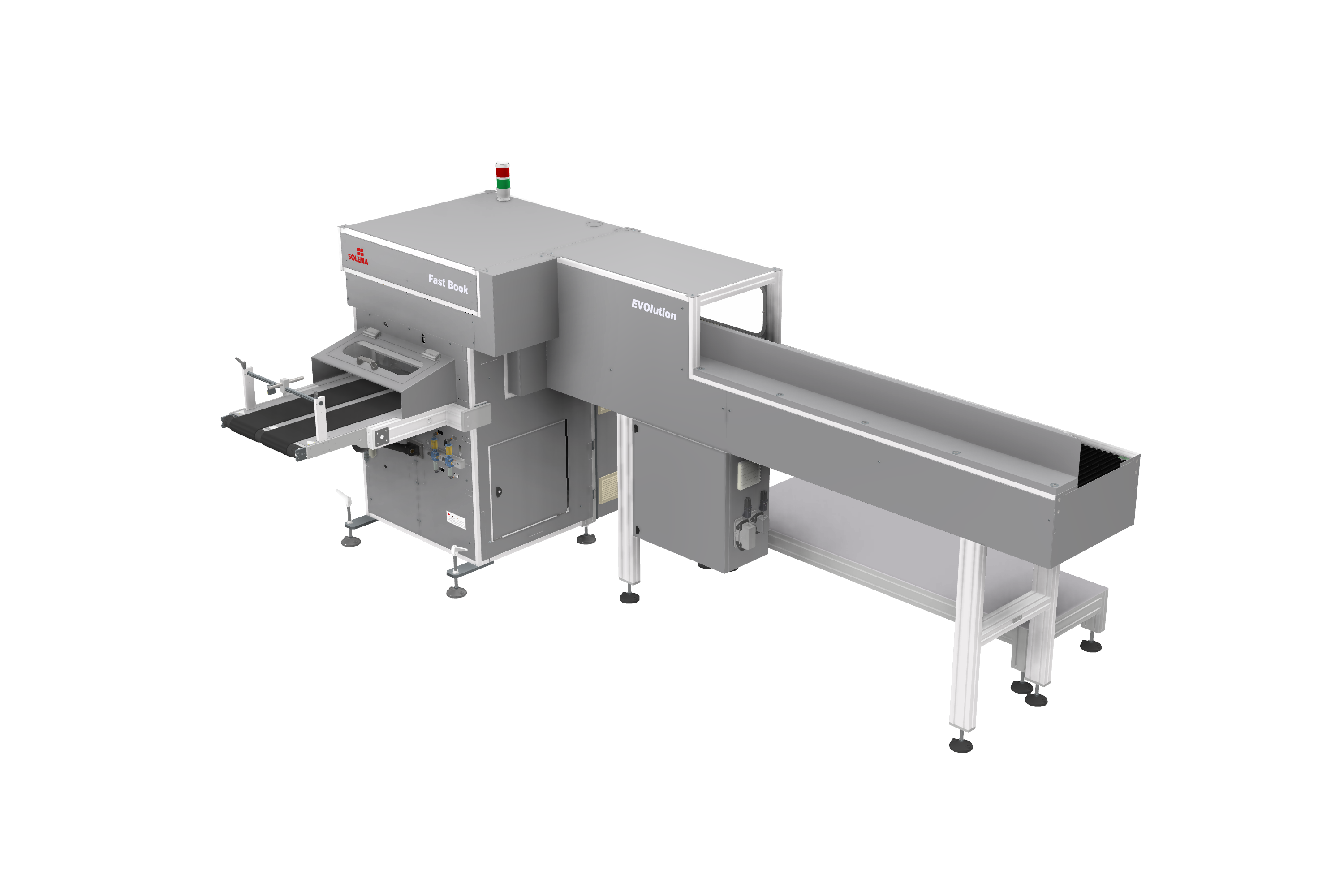
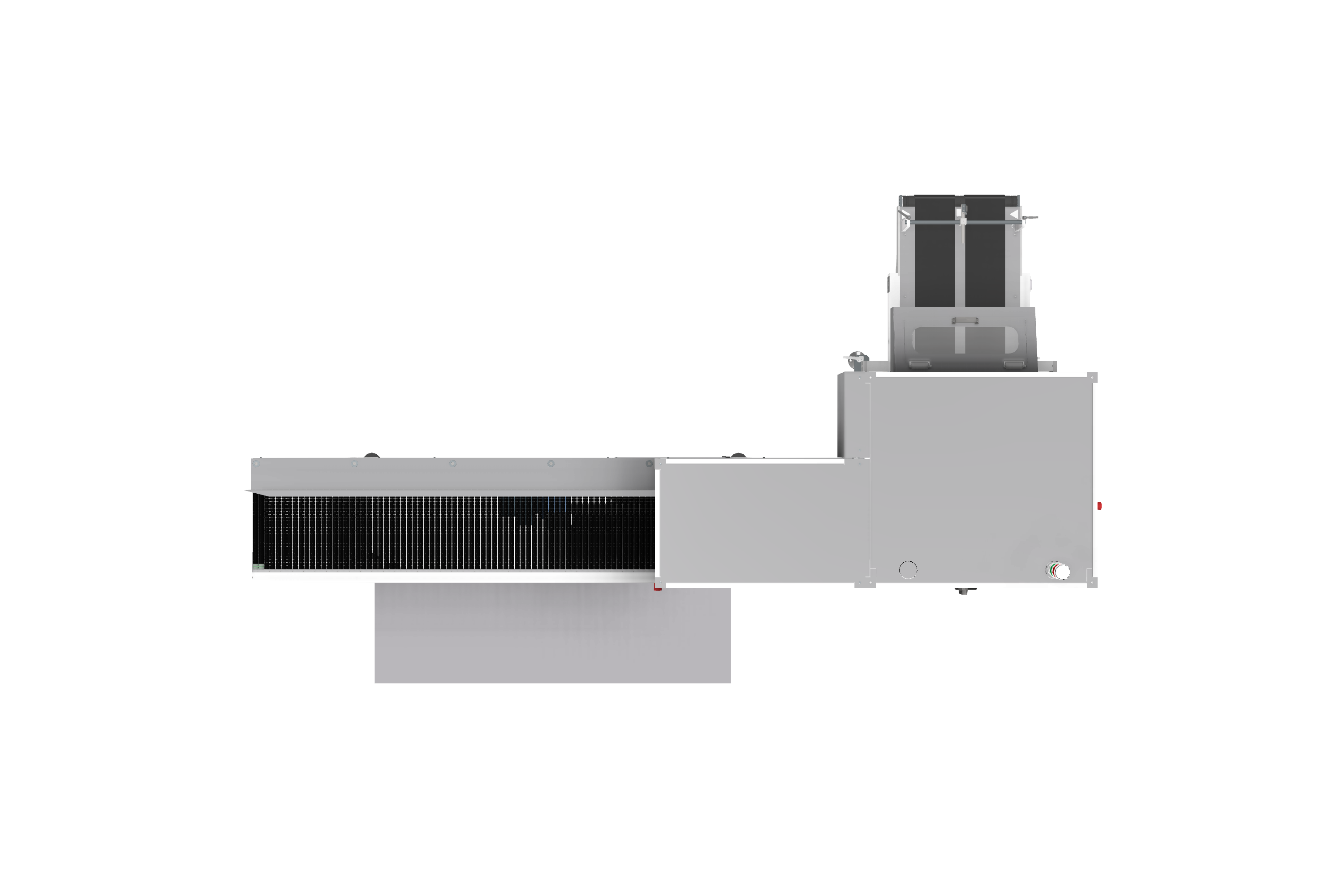
FASTBOOK EVO & AUTOLOAD

Automatic feeder of book blocks, Fastbook EVO

Automatic feeder with automated format change

Smart Automation for Digital and Conventional Bookbinding


FASTBOOK EVO & AUTOLOAD is the  automatic feeder designed by Solema for the Graphic Arts, in particular for digital lines.

Format changeovers are now fully automatic and in real time. The production process is even more precise and seamlessly integrated. Two scanners continuously read the barcodes on the front and back of the incoming products. FASTBOOK EVO recognizes the dimensions of the book block stack and transmits the data to the drop station, which automatically adjusts its parameters based on the incoming product.

Then, in the drop station, the thickness of each individual book block is measured. The pusher automatically adjusts its height to ensure correct product handling. Thanks to this mechanism, FASTBOOK EVO stands out as a fully integrated, smart solution capable of autonomously adapting to production requirements.


High performance in every production mode

FASTBOOK EVO & AUTOLOAD can also work with conventional lines while maintaining its top-tier performance:

  • Digital mode: up to 2,000 book blocks/hour | real-time automatic management of format and thickness, typical of digital printing.
  • Conventional mode: up to 8,000 book blocks/hour | high performance for medium-to-high run productions with uniform products.

Request Information

Technical Data

Machine speedmax. 2000 products/hour
Product dimensions without Autoload (L x W x H)

min. 120 × 100 × 2 mm

(4 3⁄4 × 4 × 1⁄8”)

min. 100 × 70 × 2 mm with opt. kit

(4 × 2 3⁄4 × 1⁄8”) 

max. 520 × 440 × 80 mm

(20 1⁄2 × 17 3⁄8 × 3 1⁄8”)

Pile height without Autoloadmax. 350 mm (13 3⁄4”)

Product dimensions with Autoload

(L x W x H)

min. 120 × 100 × 2 mm

(4 3⁄4 × 4 × 1⁄8”)

min. 100 × 70 × 2 mm with opt. kit 

(4 × 2 3⁄4 × 1⁄8”) 

max. 520 × 330 × 80 mm

(20 1⁄2 × 13 ×3 1⁄8”)

Pile height with Autoloadmax. 200 mm (7 7⁄8”)


FAQ

An automatic book block feeder streamlines the loading process in bookbinding lines. The operator places stacks of book blocks onto the feeder and sets the required production parameters. The machine then automatically separates each book block, aligns it, checks its position and feeds it into the binding or finishing line at a constant speed. This reduces manual handling, prevents bottlenecks and ensures a continuous, reliable workflow with greater productivity and consistency.
An automatic book block feeder provides greater control at the beginning of the production process, where inconsistencies often occur. Automating feeding makes the workflow more structured and predictable, reducing reliance on manual handling. This leads to more stable product management, especially when production volumes increase or operations run over extended shifts. Proper feeding also has a direct impact on the quality of downstream processes.
In bindery lines, maintaining a steady flow is essential. Automated systems help ensure a consistent product distribution, preventing sudden accumulation or slowdowns. The book block feeder supports a more balanced production pace and simplifies the management of format changes. Greater consistency also reduces the need for corrective interventions and allows the line to run longer without interruptions.
Integration depends on how well the system adapts to the dynamics of the production line. An automatic book block feeder uses control systems to follow variations from downstream machines, automatically adjusting speed and timing. This approach helps avoid misalignment between stages and keeps the overall process coordinated. The result is a smoother workflow, where each component operates in sync without creating bottlenecks.
Available solutions vary depending on the level of automation and production requirements. A book feeder can be configured with different elements, such as transfer tables, rollers, or pre-pile systems, to match specific needs. In practical applications, solutions like FASTBOOK & AUTOLOAD EVO show how feeding and pre-pile management can be combined to simplify product infeed. This type of configuration helps maintain a more continuous and manageable workflow.